Inlay · Onlay
What are inlay and onlay? Medical clinical information about porcelain filling treatments that offer an aesthetic and durable solution for teeth with significant material loss
Inlay and Onlay Restorations (Porcelain Fillings)
In our clinical practice, we plan inlay and onlay restorations as "partial porcelain restorations" that serve as a bridge between standard composite fillings and full crown treatments, aiming to preserve the healthy tooth structure to the maximum extent possible.
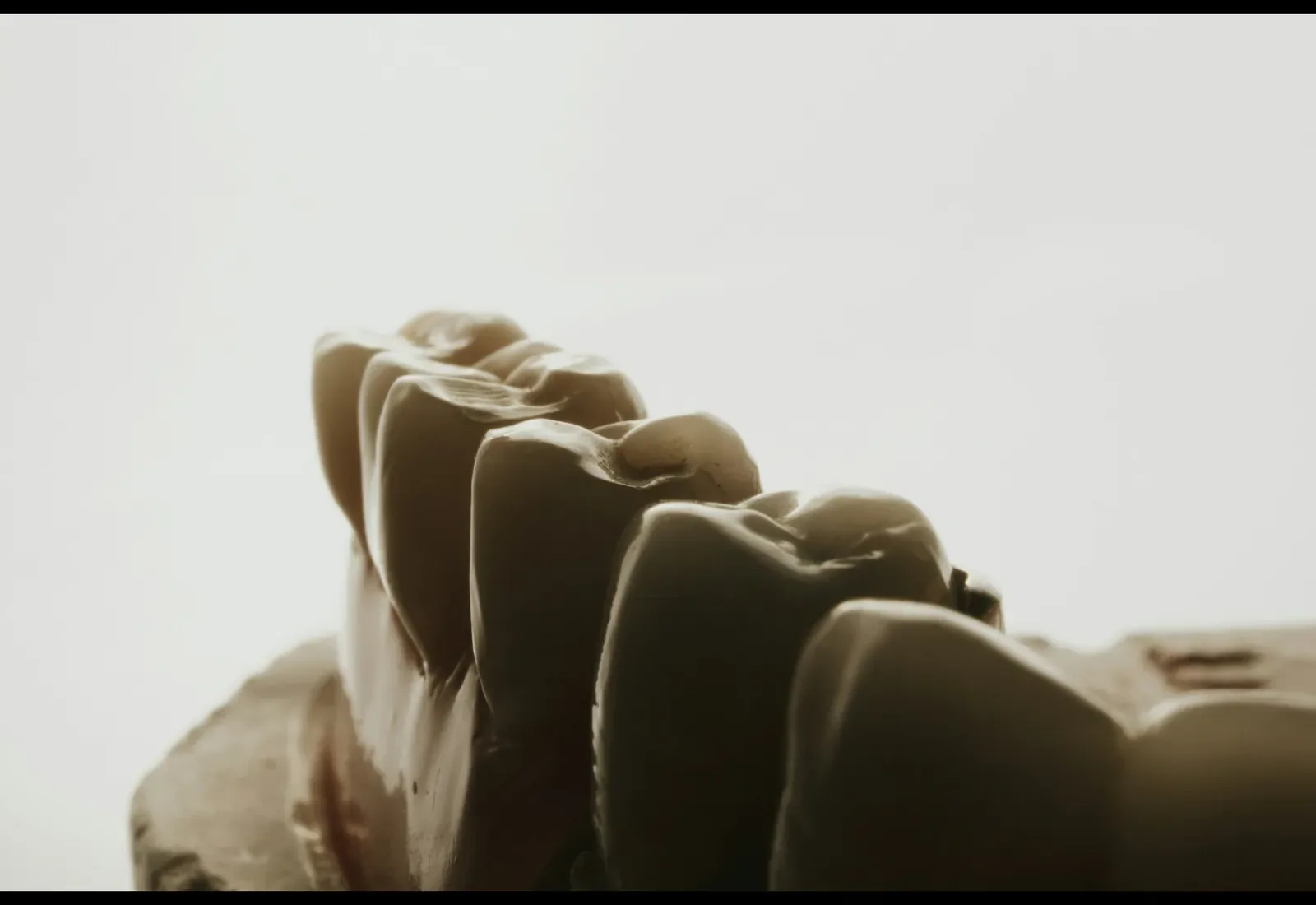
In teeth with major material loss due to extensive decay or trauma, while classic fillings may be insufficient in terms of resistance to pressure, fully reducing the tooth and covering it with a crown may lead to unnecessary biological tissue loss. At this point, using reinforced ceramic (E-Max or composite) blocks prepared with CAD/CAM technologies or in a laboratory setting, we integrate only the missing portion of the tooth with a precision like a "jigsaw piece".
In Which Clinical Cases Do We Apply Them?
In the presence of large decay cavities that standard fillings cannot mechanically support,
In trauma or fracture cases where the entire surfaces of the tooth do not need to be reduced (cut), but the chewing cusps (the peaks of the tooth) have been damaged,
In the replacement of large old amalgam (black) or composite fillings that have developed marginal leakage over time and laid the groundwork for secondary caries,
In the restoration of teeth that have undergone root canal treatment but do not have an indication for full coverage and have reduced strength.
What Are the Clinical Advantages?
Maximum Tissue Preservation: Only the decayed or damaged part of the tooth is removed; there is no need to reduce the tooth all around as in crown restorations. Healthy enamel tissue is preserved.
High Sealing and Resistance: The polymerization shrinkage (micro-gap formation) seen over time in standard fillings does not occur in porcelain restorations. Because it is chemically sealed to the tooth, the risk of secondary decay is minimal.
Excellent Anatomical and Aesthetic Fit: Since it is produced in a laboratory specifically for the patient's occlusion dynamics, it both precisely mimics natural tooth enamel and shows excellent mechanical resistance against chewing forces.
The long-term clinical success of inlay and onlay treatments depends on the cavity from which the decay has been removed being prepared with millimetric accuracy, on providing a moisture-free working environment during the bonding (cementation) stage of the restoration (isolated with a rubber dam), and on our patient's routine oral hygiene.
Legal Notice and Information
This content has been prepared solely for the purpose of informing patients and the public within the framework of the Law No. 1219 on the Practice of Medicine and Its Branches and the Regulation on Promotional and Informational Activities in Health Services. The information contained herein cannot be used for the diagnosis or treatment of diseases. In order to scientifically determine the most appropriate restorative option for the material loss in your tooth, you must consult a specialist dentist and undergo an in-person clinical examination.